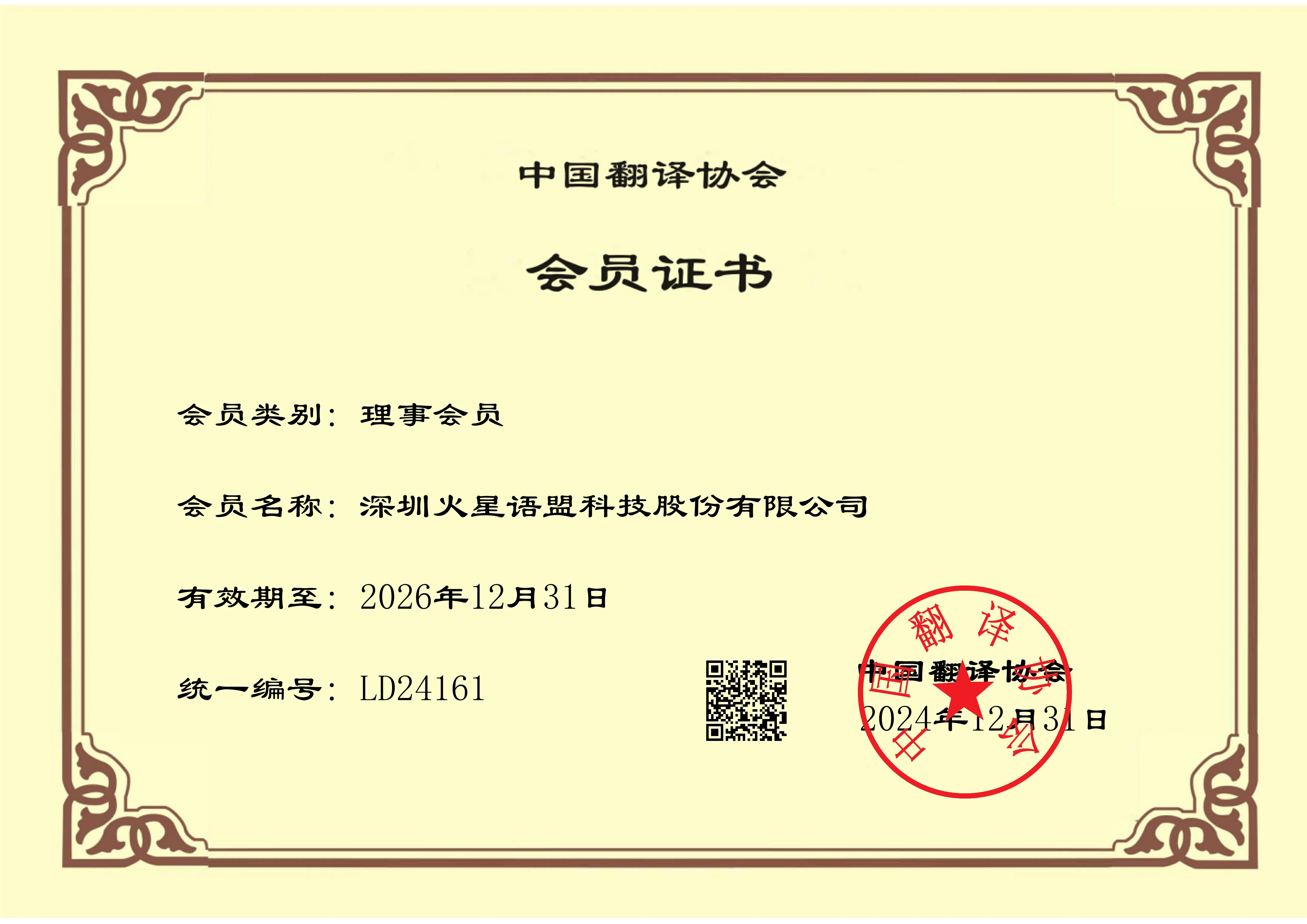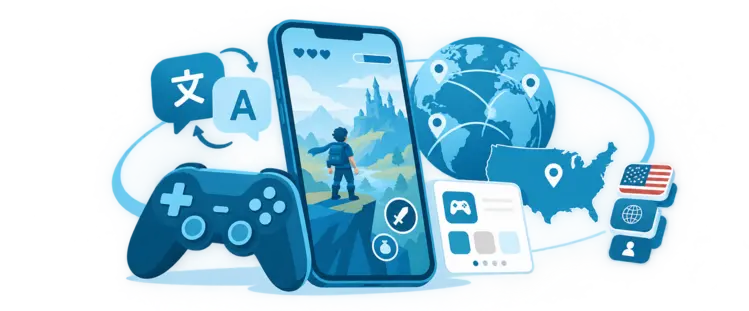
Budgeting for localization is one of the hardest calls a studio or app team makes. Quotes vary widely, word counts change late in production, and the cheapest offer often becomes the most expensive once bug fixes and re-translation arrive. This guide explains what game and mobile app localization cost in the USA, what drives the price, and how to build a budget you can defend to your producer or CFO.
Quick answer: For most US projects, professional human translation runs roughly $0.10 to $0.30 per source word, depending on language, content type, and deadline. Localization testing (LQA), voiceover, engineering, and project management are usually priced on top. A small app might cost a few thousand dollars per release, while a mid-size game can reach tens of thousands of dollars across a handful of languages.
What Does Game and App Localization Include?
Localization is more than swapping words. It covers UI strings, dialogue, store listings (App Store, Google Play, Steam), marketing copy, legal text, adapted artwork, audio, and testing on real builds. For a US-based team, it usually means taking English into languages such as Spanish, Chinese, Japanese, Korean, German, and French. For Asian studios entering North America, it means adapting content into natural American English. Both scenarios fall under localization cost in the USA, and both follow the same pricing logic.
Average Game and Mobile App Localization Costs
The table below shows how each cost component is usually priced. Ranges reflect public vendor pricing and industry benchmarks, so treat them as planning figures rather than a quote.
| Cost component | Typical pricing model | Planning range or note |
| Human translation and editing | Per source word | About $0.10 to $0.30, depending on language and deadline |
| Machine translation post-editing (MTPE) | Per word | About $0.05 to $0.12 for suitable content |
| Store page and app listing | Per word | Often a few hundred dollars per language for a typical listing |
| Linguistic QA (LQA) | Hourly | Scales with game length and number of languages |
| Engineering, UI and DTP | Hourly | Depends on file formats and layout fixes |
| Voiceover | Per line or studio hour | Often exceeds the cost of text translation |
| Project management | Percentage or minimum fee | Small jobs carry a minimum charge |
Illustrative budget examples
- Small utility app: 5,000 words into 8 languages at $0.15 per word is about $6,000 for translation, before testing.
- Mid-size game: 100,000 words into 5 languages at $0.12 to $0.20 per word is roughly $60,000 to $100,000 for translation, plus LQA.
- Published vendor example: one game localization provider lists a roughly 180,000-character Chinese RPG adapted into American English at about $39,600, with around $900 for ten hours of LQA.
These are examples, not promises. Every project is priced on its own files, languages, and schedule.
8 Factors That Drive Localization Pricing
1. Word count and repetitions. Translation memory (TM) lowers the price of repeated strings. Very small updates still carry minimum fees, because project setup costs about the same for 50 words as for 500.
2. Language pair. Chinese, Japanese, and Korean (CJK) usually cost more than widely supported European languages because qualified game linguists are scarcer and the work involves tone, honorifics, and character-count constraints.
3. Content type. Narrative-heavy RPGs need creative, context-aware writers. A puzzle game with short UI strings does not. Genre changes both price and risk.
4. Turnaround. Rush work costs more. Published rate guides show urgent jobs (1 to 2 days) priced far above flexible schedules of two weeks or longer.
5. Linguistic QA. Testing in the build catches truncated text, overlapping UI, and strings translated without context. Skipping it looks like savings but usually leads to expensive post-launch patches and bad reviews.
6. Voice, subtitles and multimedia. Casting, studio time, direction, and audio engineering often outweigh text costs in voiced games.
7. Update frequency. Live-service games and apps with weekly releases need continuous localization. The per-release cost is small, but it recurs all year.
8. Cultural adaptation. Humor, idioms, currencies, date formats, imagery, and age-rating text may need transcreation rather than literal translation.
Game vs. Mobile App Localization Cost
Games have larger volumes, deeper narrative context, more QA and sometimes full voiceover, so budgets are bigger and front-loaded. Mobile apps have smaller word counts, mostly UI strings, notifications and in-app purchase text, but they ship updates often and need localized app store metadata, screenshots and keywords for each market. App budgets are lower per release and steadier over time. In both cases, localizing the store listing is the cheapest first step and often the most visible to new users.
US-Specific Cost Considerations
- Spanish variants. US Spanish, Latin American Spanish, and European Spanish differ in vocabulary and tone. Choose based on your audience, since the wrong variant hurts credibility.
- Entering North America from Asia. Studios from China, Japan, and Korea need American English adaptation, not just translation, including slang, pop-culture references, and tone for US players.
- Store and rating requirements. Apple, Google, and Steam all reward localized metadata. Titles for the US market also need ESRB-compliant descriptions and content wording.
- Pricing in USD. Vendor rates differ by region and overhead. Providers with global linguist networks can often balance quality and budget better than single-market agencies.
Where Machine Translation and AI Save Money (and Where They Don’t)
MTPE can reduce cost for UI strings, help text, release notes, and store descriptions, where meaning is direct and stakes are low. It is risky for story dialogue, humor, brand voice, and CJK honorifics, where a fluent-sounding error can break immersion or cause offense. The most reliable approach is hybrid: AI for volume, qualified linguists for review and creative content. If your build is unreleased, also check how a vendor handles confidentiality, because uploading pre-release text to public AI tools can leak spoilers. For a deeper look, read our guides on the hybrid translation model and managed AI translation.
9 Ways to Reduce Localization Cost Without Hurting Quality
- Internationalize your code first. Externalize strings and support Unicode, text expansion, and CJK fonts before translation begins.
- Freeze text before sending it. Late changes trigger re-translation and rush fees.
- Provide context. Glossaries, style guides, screenshots, and character notes cut revision rounds.
- Use translation memory. Repeated and recycled strings should never be paid for twice.
- Prioritize languages with data. Use store analytics, player geography, and revenue data to pick the first three to five languages.
- Start with the store page. Localizing your listing for one new market is a low-cost test of demand before full localization.
- Batch your updates. Fewer, larger deliveries reduce minimum fees.
- Match method to content. Use MTPE for low-risk text and human creative translation for narrative and marketing.
- Budget LQA early. Fixing a bug in testing is far cheaper than patching after launch.
Is Game and App Localization Worth the Cost?
For most titles, yes, if you localize the right markets. One 2026 analysis of Steam data found that a majority of Steam users browse in languages other than English, and the same research suggests testing a translated store page before committing to full localization. That approach limits your risk: you invest a few hundred dollars to measure demand, then scale up where wishlists, downloads, or conversion rates prove the opportunity. Track ROI with metrics such as install-to-purchase conversion, retention by language, and review sentiment per market, not just cost per word.
How to Choose a Localization Partner You Can Trust
A low quote means little without proof of process. Before you sign, look for:
- Verifiable certifications, such as ISO 17100 for translation services and ISO 27001 for information security.
- Game and app specialization, with linguists who play and understand your genre.
- Transparent quotes that separate translation, LQA, engineering, and project management.
- A pilot or sample so you can judge quality before committing the full budget.
- Client references from comparable projects.
CCJK has provided translation and localization services since 2002 across 230+ languages, with certifications that include ISO 17100, ISO 9001 and ISO 27001. Our teams handle game localization, mobile app localization, LQA, subtitling, voiceover coordination, and multilingual DTP, and our client list includes gaming companies such as Epic Games and Tencent Games. Because we work across Asian and Western markets, we help studios both localize into CJK languages and adapt Asian titles for US players.
Frequently Asked Questions
How much does it cost to localize a mobile game?
It depends on word count, languages, and testing. A small casual game with a few thousand words may cost a few thousand dollars per language set, while a story-driven mobile RPG with voice can cost many times more. Request a quote based on your actual string files.
What is the average cost per word for game localization?
Human translation commonly falls between about $0.10 and $0.30 per source word, with MTPE lower for suitable content. Rates rise for rush deadlines, rare languages, and creative narrative work.
Is LQA included in the per-word rate?
Usually not. Per-word rates typically cover translation, editing and automated checks, while in-build linguistic testing is billed separately, often by the hour.
Can AI reduce game localization costs?
Yes, for low-risk text such as UI strings and store descriptions. For dialogue, humor, and cultural content, human review remains essential to protect quality and brand voice.
Which languages should a US studio localize first?
Base the decision on your analytics. Common first choices are US Spanish, Japanese, Simplified Chinese, Korean, German, and French, but the right order depends on your genre and audience.
Get an Accurate Localization Quote
Ready to budget with confidence? Send CCJK your word count, target languages, and release schedule, and our team will prepare a clear, itemized estimate for your game or app. Request a free quote or contact our localization team.
Pricing ranges in this article are general market benchmarks compiled from public vendor pricing and industry sources and are not a quotation. Final costs depend on project scope.
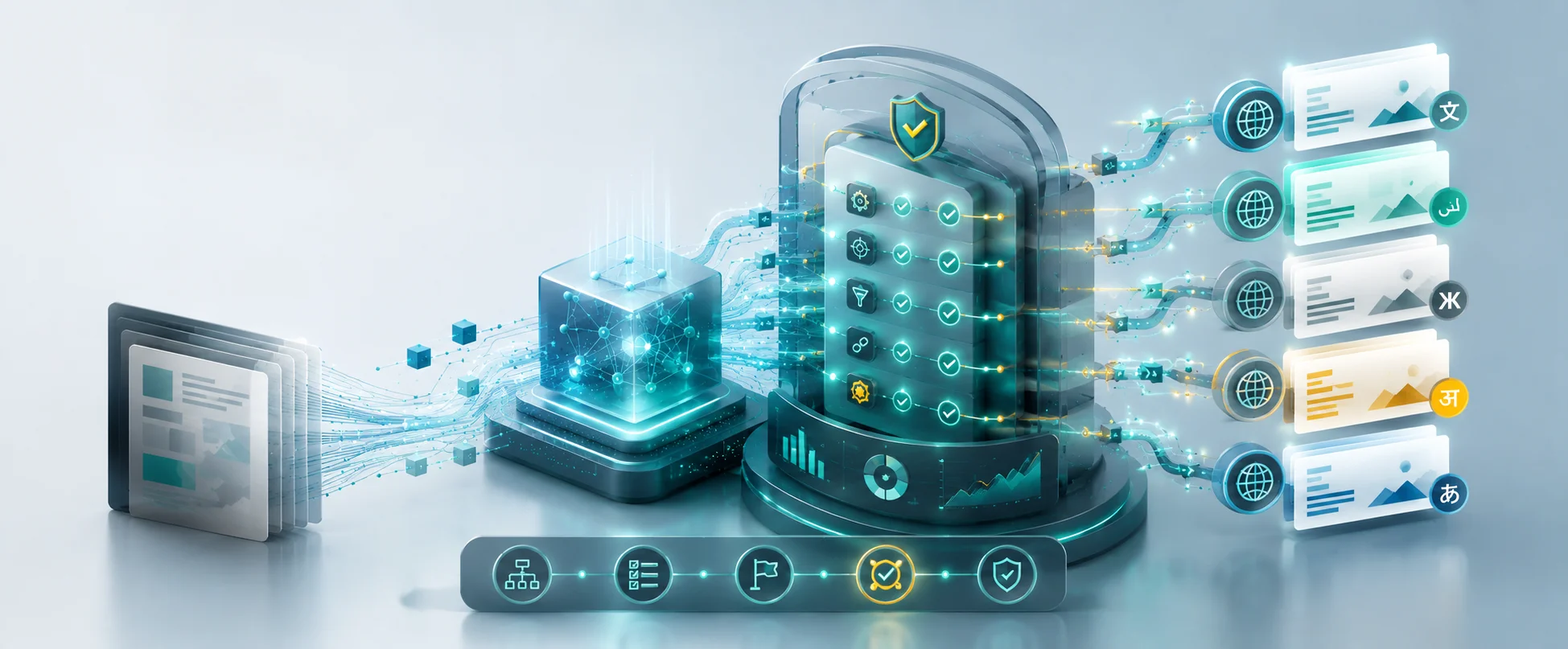



 contact@ccjk.com


 Chinese